
Baltimore City Property Records
Baltimore City property records are kept at the Baltimore City Circuit Court and through the Maryland State Department of Assessments and Taxation. Baltimore is an independent city, which means it is its own jurisdiction, separate from every county in Maryland, and property records here follow a distinct path from the rest of the state.
Baltimore City Overview
Baltimore City as an Independent Jurisdiction
Baltimore City holds a unique place in Maryland law. It is one of the few independent cities in the United States, and it is Maryland's only one. When Baltimore was separated from Baltimore County in 1851, it became the 24th Maryland jurisdiction, a stand-alone entity with its own courts, its own tax system, and its own set of property records. This matters a great deal if you need to search property records here.
Do not confuse Baltimore City with Baltimore County. They share a name but they are not the same place. Baltimore County wraps around the city on three sides, but the city's records are kept entirely apart. A deed recorded in Baltimore City is at the Baltimore City Circuit Court. A deed from a property in Baltimore County goes to the Baltimore County Circuit Court in Towson. Many people make this mistake and end up at the wrong office. If your address is within the city limits, your records are at the Baltimore City courthouse, full stop.
The Baltimore City Circuit Court is located at Clarence M. Mitchell Jr. Courthouse, 100 N. Calvert Street, Baltimore, MD 21202. The Land Records Division handles all deed recordings, mortgages, and related instruments. You can reach the clerk's office at (410) 333-3722. Walk-in hours are generally Monday through Friday, 8:30 AM to 4:30 PM, though it is wise to call ahead. The courthouse is in the heart of downtown Baltimore, near City Hall and the main government complex.
SDAT Property Assessments for Baltimore City
The Maryland State Department of Assessments and Taxation, known as SDAT, handles property assessments for Baltimore City just as it does for every county in the state. However, Baltimore City has its own SDAT assessment office, separate from the Baltimore County office. SDAT reassesses properties on a three-year cycle. Your assessment notice comes in the mail each year, but the physical inspection that drives your value happens once every three years.
The SDAT real property search portal is the fastest way to look up any parcel in Baltimore City. You can search by street address, account number, or parcel identifier. The system does not support name searches, so you need an address or account number to start. Visit dat.maryland.gov/realproperty to run your search. The portal shows the current assessment, the owner of record, deed reference numbers, and the tax map and parcel data for each property in Baltimore City.
The SDAT portal for Baltimore City at dat.maryland.gov is the starting point for most property research. This page from the Maryland Department of Assessments and Taxation lets you search Baltimore City parcels by address or account number.
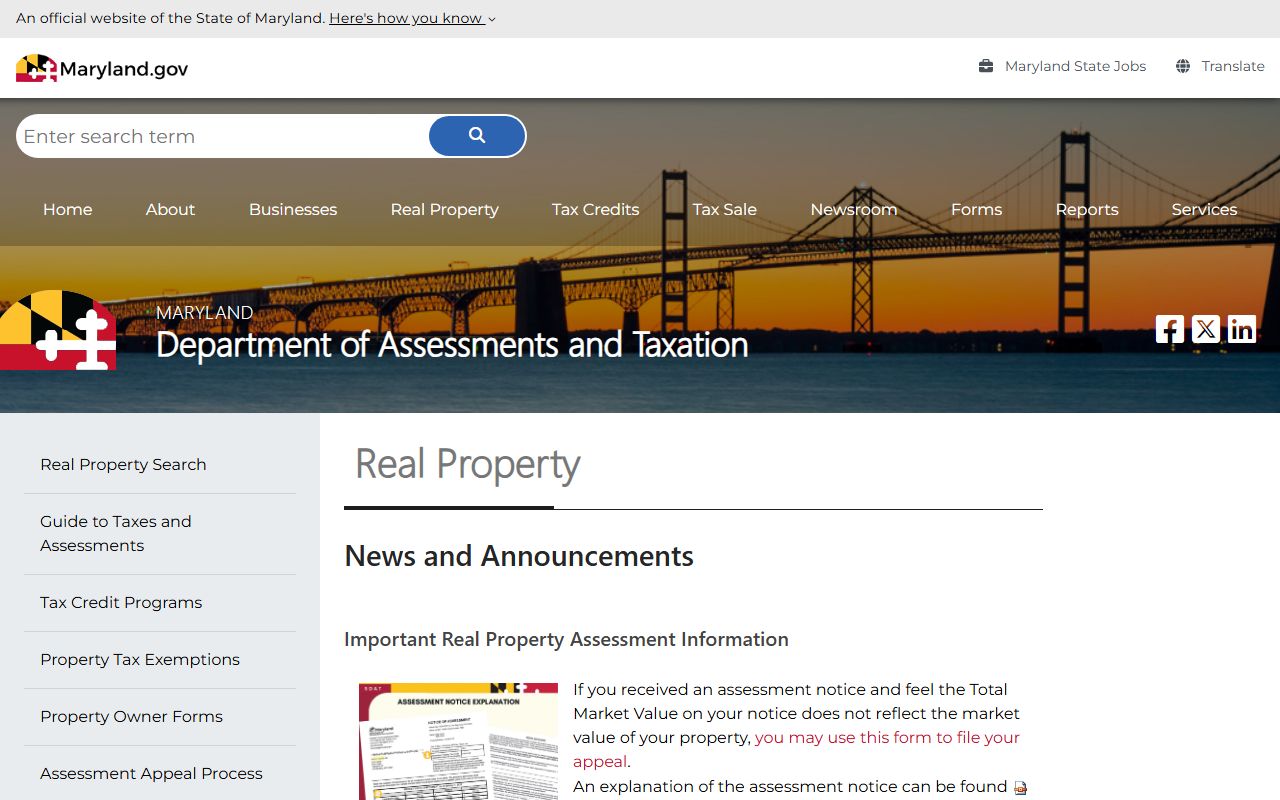
The search results show the current owner, deed book references, assessment values, and tax credit status for each parcel in Baltimore City.
If you disagree with an assessment, you have 45 days from the date of your notice to file an appeal. The appeal goes to the Property Tax Assessment Appeals Board for Baltimore City. Appeals are heard downtown and are free to file. SDAT also runs several tax credit programs that apply to Baltimore City property owners, including the Homestead Tax Credit, the Homeowners Tax Credit for lower-income residents, and a Renters Tax Credit. You apply for these at dat.maryland.gov or by calling 410-767-1184.
Recording Deeds in Baltimore City
Deeds and other land instruments recorded in Baltimore City go through the Baltimore City Circuit Court's Land Records Division. The recording process in Maryland uses a two-step approach. Before the clerk can record your deed, the Finance Department must review and stamp it. In Baltimore City, this means a stop at the City's transfer and recordation tax office before you go to the clerk. Both state and local taxes apply at that point.
Maryland's state recordation tax is $20 for the first two pages and $5 for each page after that, plus a $75 surcharge on most instruments. The state transfer tax is 0.5% of the sale price. First-time homebuyers pay a reduced state transfer tax of 0.25%. Baltimore City also collects a local transfer tax on top of the state rate. You pay all of these before the clerk will stamp and record your deed. Make sure your instrument is prepared correctly before you bring it in, because errors or missing information will send you back to redo the paperwork.
Under Real Property Article Section 3-101 of the Maryland Code, an instrument of writing that transfers title to real property must be recorded to be effective against third parties. This means your deed is not fully protected until it is on record at the Baltimore City Circuit Court. The recording gives the world legal notice that you own the property. Once recorded, the deed becomes a permanent public record in Baltimore City.
The MDLandRec system, available at landrec.msa.maryland.gov, is the statewide online portal for recorded land instruments. Baltimore City is fully covered in this system. You can search recorded deeds, mortgages, releases, and other instruments by name, date range, document type, and more. Images of recorded documents go back many years in the Baltimore City records. Older historical records are available through the Maryland State Archives.
The Maryland Land Records portal at landrec.msa.maryland.gov is the key tool for finding recorded deeds and mortgages in Baltimore City. The portal covers all 24 Maryland jurisdictions including the city.
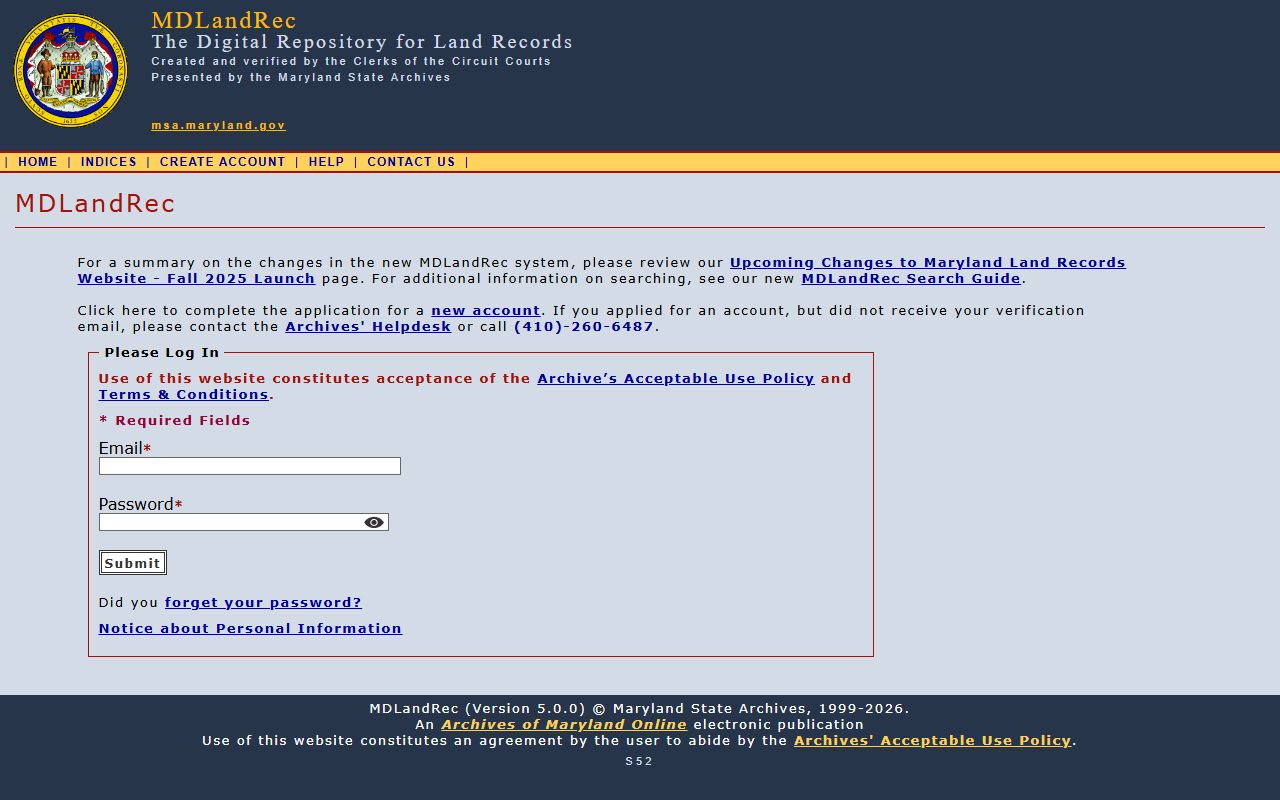
Searches in the portal return document images for recorded instruments in Baltimore City going back decades, with more recent records fully indexed and searchable by grantor and grantee names.
Historical Records and the Baltimore Block Book System
Baltimore City has one of the most distinctive property record systems in the country. After 1851, the city used a Block Book system to track real property. Each block in the city was assigned a number, and properties within that block were indexed by block and lot rather than by grantor and grantee names alone. If you are researching a Baltimore City property from the 19th or early 20th century, you may need to know the block and lot number to trace the chain of title effectively.
The Maryland State Archives in Annapolis holds a large collection of historical Baltimore City property records, including early deed books, plat maps, and block book entries. The Archives can be reached at 410-260-6400 or through their website at msa.maryland.gov. Researchers who need pre-20th century records often have to visit the Archives in person or use their online guide to request records by mail. Staff there are experienced with historical Baltimore research and can point you to the right series of records.
The Maryland State Archives at msa.maryland.gov is a key source for historical Baltimore City property records, including deed books, plat maps, and indexes that predate modern digital systems.
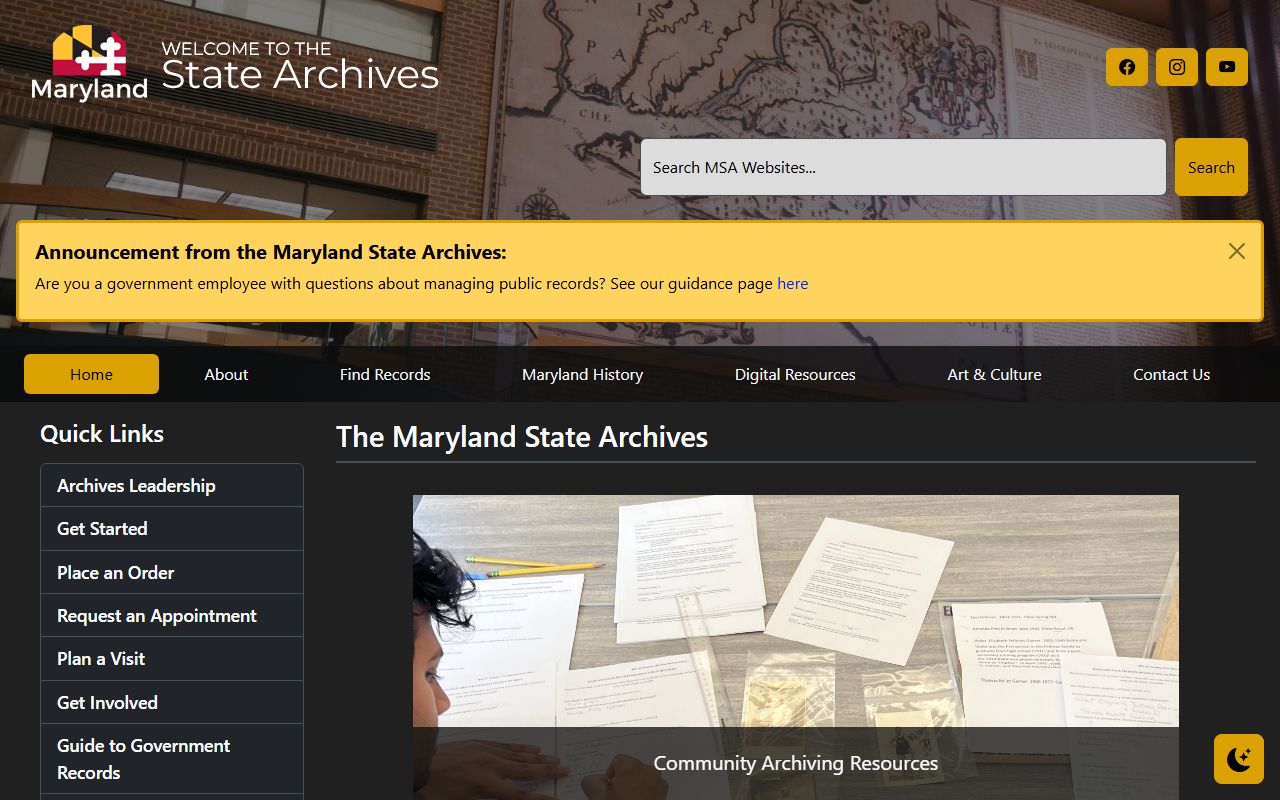
The Archives holds early deed books, block book records, and other instruments that trace property ownership in Baltimore City back to the colonial era.
Liens, Judgments, and Court Records
Property liens in Baltimore City come from several sources. Mechanics' liens are recorded at the Baltimore City Circuit Court under Real Property Article Section 9-102. Judgment liens attach to real property when a court judgment is docketed in the county, or in this case in Baltimore City, where the property is located. Tax liens arise when property taxes go unpaid. All of these affect title and show up in a proper title search.
The Maryland Judiciary's case search system at casesearch.courts.state.md.us lets you search court cases in Baltimore City including judgment cases that may result in liens. This is a free public search tool. You can find civil judgments, lis pendens notices, and other court actions that could affect a property's title. Any active litigation involving a Baltimore City property should appear in this system once the case is filed with the court.
Baltimore City has a high volume of property transactions each year given its size and density. The range of property types here is broad: historic rowhouses, which are iconic to Baltimore, commercial properties on the waterfront, industrial sites, apartment buildings, and newer mixed-use development. Each type may carry different recorded covenants, easements, or restrictions. A full title search in Baltimore City looks at all these recorded instruments, not just the deeds.
Nearby Cities
These cities are near Baltimore City. Each one is in a surrounding county and has its own set of property records through the relevant county circuit court.
Baltimore City Is Its Own Jurisdiction
Baltimore City does not belong to any county. For deeds and land records, use the Baltimore City Circuit Court's Land Records Division at 100 N. Calvert Street. For property assessments and tax credits, use SDAT at dat.maryland.gov or call 410-767-1184. For historical records, contact the Maryland State Archives at 410-260-6400. Each of these serves Baltimore City as a stand-alone jurisdiction, separate from every Maryland county.